


Citizens' Convention for Transitions in the Rouen Metropolitan Area: What's next?
The Citizens' Convention for Transitions in the Rouen Metropolitan Area brought together around one hundred citizens over five working sessions, from September 2023 to June 2024. It was part of the revision of three key planning documents : the Territorial Coherence Scheme (SCoT), the Territorial Climate, Air and Energy Plan (PCAET), and the Intermunicipal Local Urban Development Plan (PLUi).
The process was implemented and facilitated with the support of Res Publica.
As the report was submitted, we spoke with Isadora Guerra, head of the Metropolitan Area's Citizen Participation Department,.

Within what framework was the citizens' convention established?
Isadora Guerra : As the head of citizen participation for the Rouen Metropolitan Area, I had wanted to establish a citizens' convention for a long time, but I was waiting for the ideal topic. Furthermore, the elected officials of the Metropolitan Area were also keen to organize such a convention. During the revision of the Territorial Coherence Scheme (SCoT), the Territorial Climate, Air and Energy Plan (PCAET), and the Intermunicipal Local Urban Development Plan (PLUi), it was necessary to define a territorial project for 2050, in consultation with the public. This seemed like the perfect opportunity to launch a convention!
The convention was part of a broader consultation on the future of the Rouen Metropolitan Area up to 2050, which made the two initiatives complementary. The outcome of the citizens' convention was very fruitful, but we knew from the outset that it would only represent the views of a small segment of the population. It was therefore essential tobroaden participation to the general public, but also to employees of the metropolitan area, elected officials and staff of the municipalities, the non-profit sector, the business community, and labor unions. To achieve this, we created governance and consultation bodies . We established a municipal assembly and organized a series of workshops with our development council. We set up a mobile information kiosk that traveled throughout the region, allowing us to directly engage with citizens, and we also implemented an online questionnaire and participatory public meetings. The goal was to multiply these initiatives to reach as many people as possible.
Why a citizens' convention?
Isadora Guerra : Since this was the first convention organized by the Metropolis, we had to defend the project to colleagues who might have been a little skeptical about asking citizens to contribute to the very definition of the territorial project.
We considered the recruitment : should we issue a call for volunteers, or rather hold a lottery based on electoral lists ? We opted for volunteers, as we didn't want to rush the citizens. However, it was essential that as many people as possible have the opportunity to volunteer. We traveled throughout the region to explain the process and invite people to participate. We went to train stations, markets, the Armada[1]… We received over 400 applications ! We then conducted a lottery with a bailiff present, selecting 100 citizens while respecting certain criteria (gender, place of residence (urban area, city center, towns, villages), age group). Unfortunately, we didn't have all the socioeconomic groups we would have liked. The working class, for example, despite being very present in the area, was missing.
The main strength of the convention was the method developed by Res publica. We worked with volunteer citizens; we therefore couldn't afford to disappoint them. Over five working sessions, we had time to observe the emergence of the debate, the points of disagreement, and how to reach a consensus. It was an enriching experience for everyone : the citizens learned a great deal, thanks to the presentations by experts and the exchanges with their fellow citizens, while the elected officials will be able to enhance their decision-making with informed input.
For us, the follow-up was crucial. We really needed to be sure that we would be able to use the citizens' contributions.
[ 1] The Rouen Armada is the world's largest gathering of tall ships. This event takes place every four years. The last edition was held in June 2023.

What about the method?
After several working sessions in subgroups, the citizens collectively arrived at a shared vision of the territory in 2050and a symbolic positioning for each dilemma.
The initial premise was to successfully reconcile the well-being of citizens with social and environmental justice in a context of disruption that demands change. It was therefore necessary to provide an informed opinion that would allow elected officials to make wise choices.
What were the outcomes of this citizens' convention?
For the Metropolis and its teams, simply preparing each weekend of work with the convention provided material for developing planning documents. The commitment of the colleagues in charge of these various documents allowed for continuous iterative work with the citizens.
For the citizens, it was an experience that was as intellectually enriching as it was personally. At the end of each weekend, they were tired, but their eyes were shining!
The elected officials were also very involved. Each session ended with a debriefing, in the presence of one or more elected officials. This is a significant positive aspect of the method.
The goal of this convention was not to fuel our eco-anxiety. Despite the alarming figures, the citizens did not lose hope because they had potential solutions. They were reassured by the presence of the elected officials, who were receptive to the proposals.
Finally, the convention provided material for other areas of consultation. We were able to discuss the outcomes with other citizens, economic and community stakeholders, and further develop ideas.
A citizens' monitoring committee was established following the convention. What is it and what does it achieve?
We suggested that we work together to consider how their requests could be implemented. This is how the Citizens' Monitoring Committee.
This monitoring committee was naturally going to be composed of volunteer members of the Convention. However, the members wanted to include other citizenswho hadn't participated in the process.
The Convention's report was published, shared, and disseminated in a press release. It was presented at a public meeting, which was also broadcast on YouTube. The replay of the meeting is still available. Subsequently, a call for volunteers to join the monitoring committee was launched. Around one hundred people responded positively, which necessitated another random selection!
At each stage of the planning document development process, elected officials ask the monitoring committee to review and verify whether the proposals from the citizens' convention have been incorporated. We held an initial meeting in November on the strategic development plan (PAS). Citizens were generally satisfied. They did, however, point out a few areas for improvement, particularly that the content was sometimes a bit too technical. In April, May, and June, further working sessions will be held on the policy and objectives document (DOO), the craft, commercial, and logistics development document (DAACL), and the air, energy, and climate action program (AEC) .
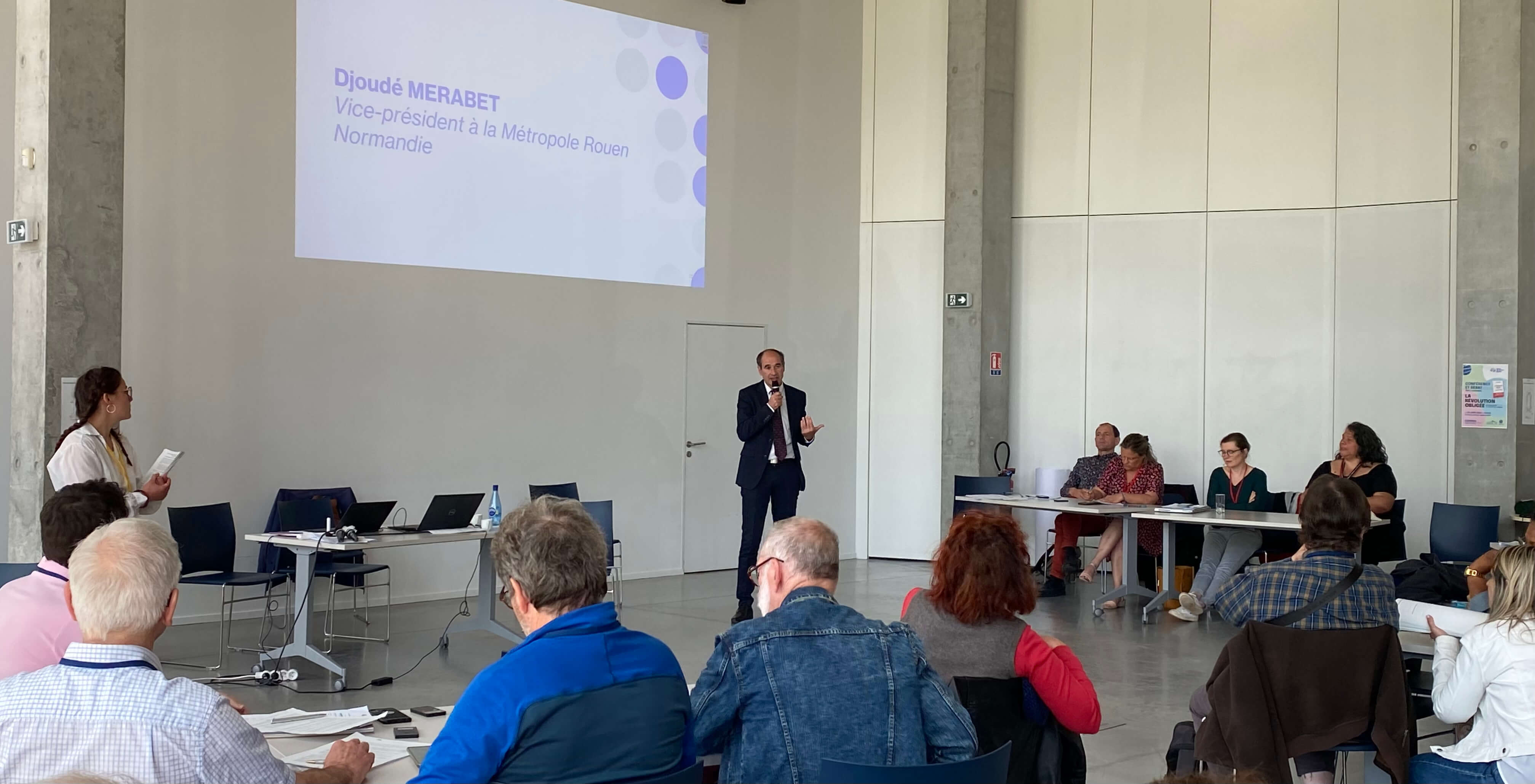
How will the link be made with other public consultation mechanisms?
We tried to be as transparent as possible. The general public was informed about the citizens' convention. Sometimes, we addressed elements that emerged from the convention.
I would like to go further, for example, by suggesting that the citizens of the convention organize discussion groups to raise awareness among other citizens about the challenges of the socio-ecological transition.
We made a video summarizing the convention, and we published testimonials.
What are your key takeaways from Res publica's support in framing and facilitating the Convention?
Implementing the approach took time, but it was crucial. The narrative development, the work on the dilemmas, the input from experts, the facilitation of debates (including during the most challenging moments), the feedback sessions… All of this was possible thanks to a service provider we could fully trust.
Listening, dialogue… Res publica applies its own methods of citizen participation in setting up the processes! And I support it, because it's the method I use with my teams.

Irene ROSSETTI, Marie CASANELLES and Frédéric FIATTE


