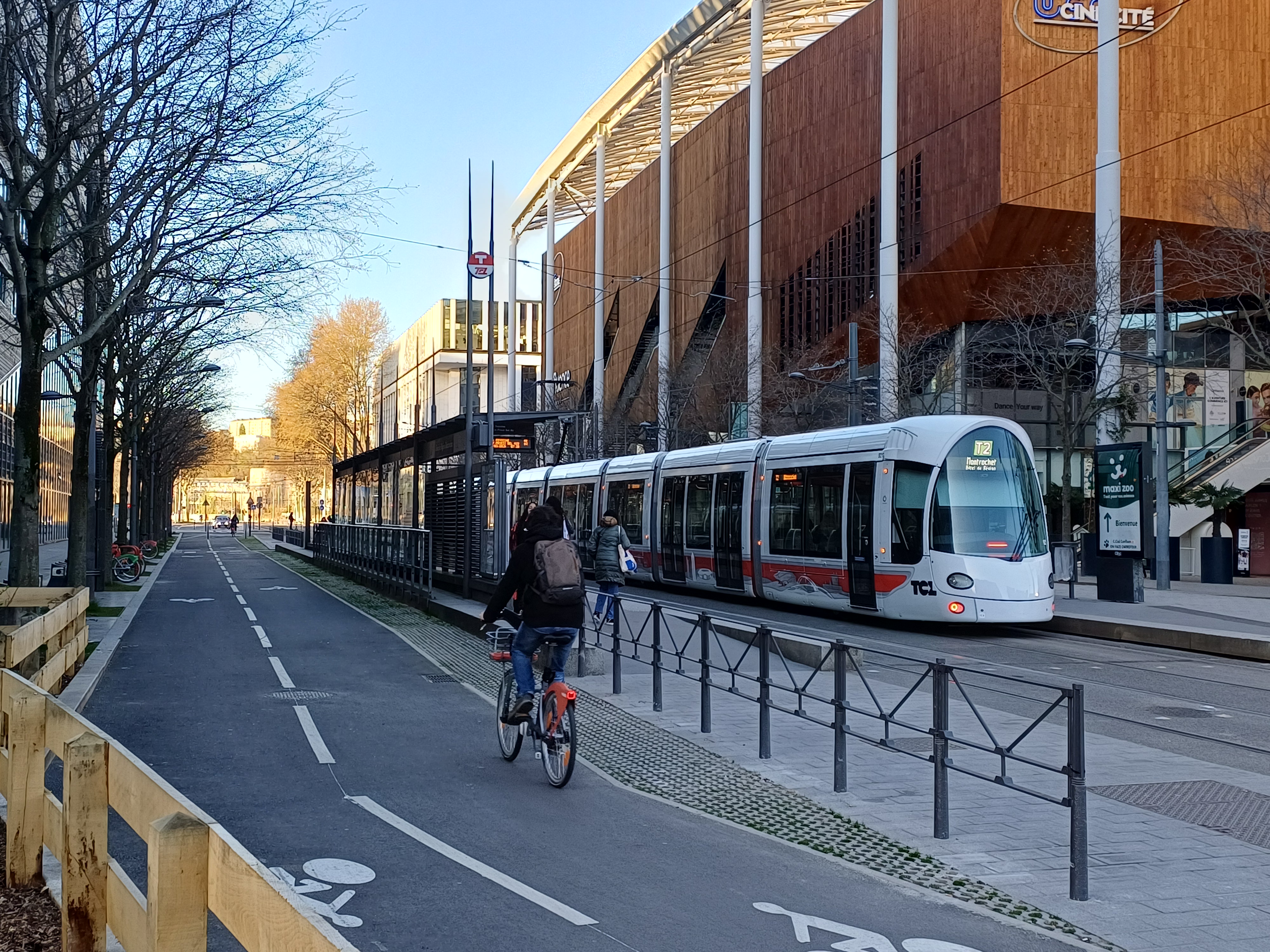


Mobility: a contentious issue for citizen participation?
In the context of the 2026 municipal elections, mobility is a major concern for the French : 29% of them state that traffic and parking are among the main issues of the next term, and 23% cite the development of public transport (Terram Institute and Project Tempo survey, 2026 Municipal Elections: What are voters' priorities?). This issue is so prominent because mobility is central to daily life in both urban and rural areas, influencing access to employment, public services, shops, healthcare, and education. Consequently, it has a significant impact on the accessibility of territories and their local economies. Added to this issue of territorial attractiveness is a growing interest among citizens in ecology and climate change. However, transport is responsible for a quarter of CO2 emissions in the European Union, 71.7% of which come from road transport. The development of low-carbon mobility is therefore essential to meet the challenges of tomorrow. For all these reasons, questions about how we get around are playing an increasingly important role in local debate.
In this article, we discuss two dialogues prepared and moderated by Res publica on this subject:
Citizens' Convention for the Northern Tram – Strasbourg Eurometropolis – 2025
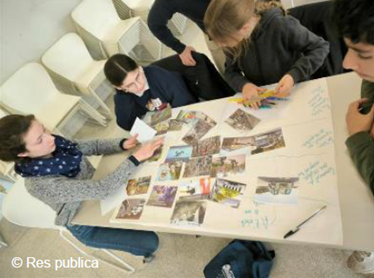
The Citizens' Convention for the Northern Tram brought together 100 randomly selected citizens, representative of the population of the Strasbourg Eurometropolis, to work over six sessions on the route of a new tram line aimed at better connecting the priority neighborhoods (QPVs) in the northern part of the metropolitan area to Strasbourg city center. After hearings with various stakeholders, site visits, and discussions, the participants were able to propose a preferred route while discussing the conditions for success, the integration of the tramway into a limited urban space, and the impact on the rest of the transport network and urban planning.
Development of the mobility plan for the greater Toulouse area – Tisséo Collectivités -2024-2028
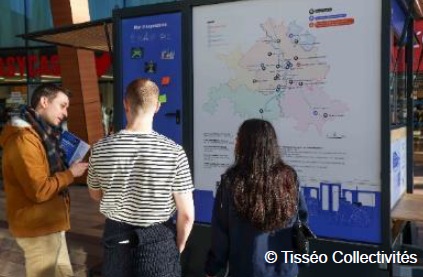
Under the aegis of Tisséo Collectivités, the Mobility Organising Authority (AOM) of the greater Toulouse area, which includes 5 inter-municipalities, the "Tomorrow's Mobilities!" initiative was launched to build the future mobility plan (PDM), covering the period 2030-2040. This is a long-term initiative that began in 2024 and will continue until 2028. A preliminary consultation, supervised by the CNDP (National Commission for Public Debate), was organized between November 2024 and February 2025 to involve the public in discussions on the current situation and the debate on the challenges and objectives of the Sustainable Mobility Plan (PDM). This was achieved through various dialogue methods (citizen panels, stakeholder reports, workshops, mobile debates, webinars, website, etc.) to reach the widest possible audience while thoroughly examining the subject. Currently, the project is in a phase of ongoing consultation, and a monitoring committee has been established, bringing together members of the preliminary consultation panel, students, employers, unions, user associations, members of the Development Council, and others, to further develop the discussions and explore several possible scenarios.
The Mayor: a gateway to the topic of mobility
In terms of mobility, the Mayor has two main responsibilities: developing and maintaining municipal roads, and regulating traffic. The Mayor, in consultation with the municipal council, decides on road renovations and improvements, oversees road cleaning and lighting, regulates speed limits, organizes parking, and manages traffic flow. However, most mobility-related services are managed by other stakeholders. The Mobility Orientation Law (LOM) has notably strengthened the role of inter-municipal authorities (directly or through inter-municipal associations) and the Region in the governance and organization of mobility, as these local authorities hold the status of Mobility Organizing Authorities (AOMs).
However, this complex administrative structure is often difficult for residents to understand ; this is why they frequently turn to their mayor, the quintessential local representative, to share their observations or wishes regarding mobility, regardless of the mayor's specific responsibilities. The mayor then assumes a coordinating role between the various relevant stakeholders, relaying and supporting requests when direct action is not always possible. Furthermore, in addition to their mayoral duties, mayors are often elected members of inter-municipal bodies and/or transport authorities, and can therefore act on matters not directly related to their mayoral responsibilities.
For the Strasbourg Eurometropolis tramway project, the mayors of the cities involved—Strasbourg, Schiltigheim, and Bischheim (and even those of the potentially future-served municipalities of Hœnheim and Souffelweyersheim)—all demonstrated a strong commitment and involvement in the project and participated in the citizens' convention, as the project is crucial for their communities.
Mobility: a set of often divisive issues
Mobility is often a divisive issue because it affects daily life and individual freedom. Car use, particularly single-occupancy vehicle use, crystallizes tensions: some want to reduce its role due to pollution, noise, or the occupation of public space, while others explain that they have no alternatives (unsociable work schedules, distance, lack of public transport) and fear being penalized. Both positions are legitimate and recognized in public debates. To trigger the necessary change in practices given the ecological emergency, two main approaches clash: incentives or coercion. This divide is illustrated, for example, in the work and opinion produced by the citizens' panel within the framework of the "Tomorrow's Mobilities!" initiative: "For some members of the panel, the freedom of some ends where that of others begins: incentivizing, and if necessary compelling, behavioral change represents part of the solution." For another part of the panel, it is essential to ensure respect for individual freedoms by avoiding the implementation of measures restricting individual car use by 2040.
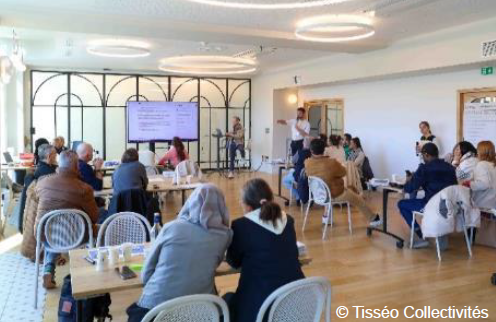
Mobility is an area that touches on everyone's sensitivities, where many stakeholders hold diverse viewpoints. It is in this delicate context that consultation mechanisms come into play. They allow people with different experiences, beliefs, and life situations to meet, exchange ideas, and understand the needs and priorities of other residents. In this way, everyone realizes how many people hold different viewpoints—and are legitimate in holding them. Disagreements may persist after the debates, but participants are transformed by considering other perspectives and personal experiences.
These divisions and tensions are often exacerbated by the fact that in urban areas, the available space on public roads is limited : pedestrians, public transport passengers, cyclists, motorists, etc. They must share a limited space. However, to develop a new use currently absent from a public space, such as a tram line requiring a dedicated platform, it is necessary to encroach on spaces previously reserved for other users. It is for this reason that the members of the Citizens' Convention of the Strasbourg Eurometropolis had to take a stance on a number of challenges to determine the various priorities among the tram platform, greening and de-paving, motorized vehicle traffic, cycling infrastructure, sidewalks, and parking spaces. Collectively determining their position on these challenges was one of the most difficult exercises of their work, but they succeeded by considering, in particular, the conditions necessary to guarantee the project's social acceptability to all.
A unique topic for consultation
Mobility, a subject at the crossroads of major challenges (spatial planning, ecological transition, etc.) and daily life, is therefore a unique and highly sensitive topic for discussion. However, through our experience, we have observed that stakeholders generally succeed in uniting their viewpoints around a common objective: the pursuit of spatial and social justice. Indeed, while at first glance everyone may hold different and sometimes entrenched positions, they all agree on the importance of considering the specific needs of people living far from the centers of large cities and of integrating into the discussion the needs of all social classes and population groups who may have particular mobility needs (the elderly, families, teenagers, people with disabilities, etc.). Thus, the issue of "Social and Territorial Cohesion" was strongly supported by participants in the preliminary consultation for the "Tomorrow's Mobilities!" initiative. who made numerous proposals to guarantee access to and accessibility of public transport and active modes of transport for everyone, and to ensure the right to mobility for all residents of the greater Toulouse area, regardless of where they live or work.
At the Citizens' Convention of the Strasbourg Eurometropolis, the question posed to citizens was : "Under what conditions and for what success does the tramway service to the northern municipalities seem most appropriate in light of the challenges of ecological transition and territorial equity?"The integration of the concept of territorial equity into the question acted as a guiding thread during the discussions, allowing citizens (including those who initially held very strong opinions) to move forward effectively around a common and unwavering objective.
While this objective of social and spatial justice is one of the keys to resolving the conflict surrounding this issue, the means to be implemented do not always meet with unanimous agreement. Thus, in the greater Toulouse area, the issue of free public transport, for example, has been the subject of debate.
Mobility issues regularly stir public debate because the stakes involved are high and the consequences of mobility policies on daily life can be significant. Consulting on these issues, beyond regulatory obligations, is absolutely essential to ensure that the spatial organization of travel functions well and that everyone finds their place without feeling marginalized or excluded from public policy. The shared objectives of social justice and territorial equity, often linked, frequently appear as a promising avenue to explore so that consultations are effective and serve mobility projects efficiently.


